Why Therapy Websites Fail to Convert Consultation Requests
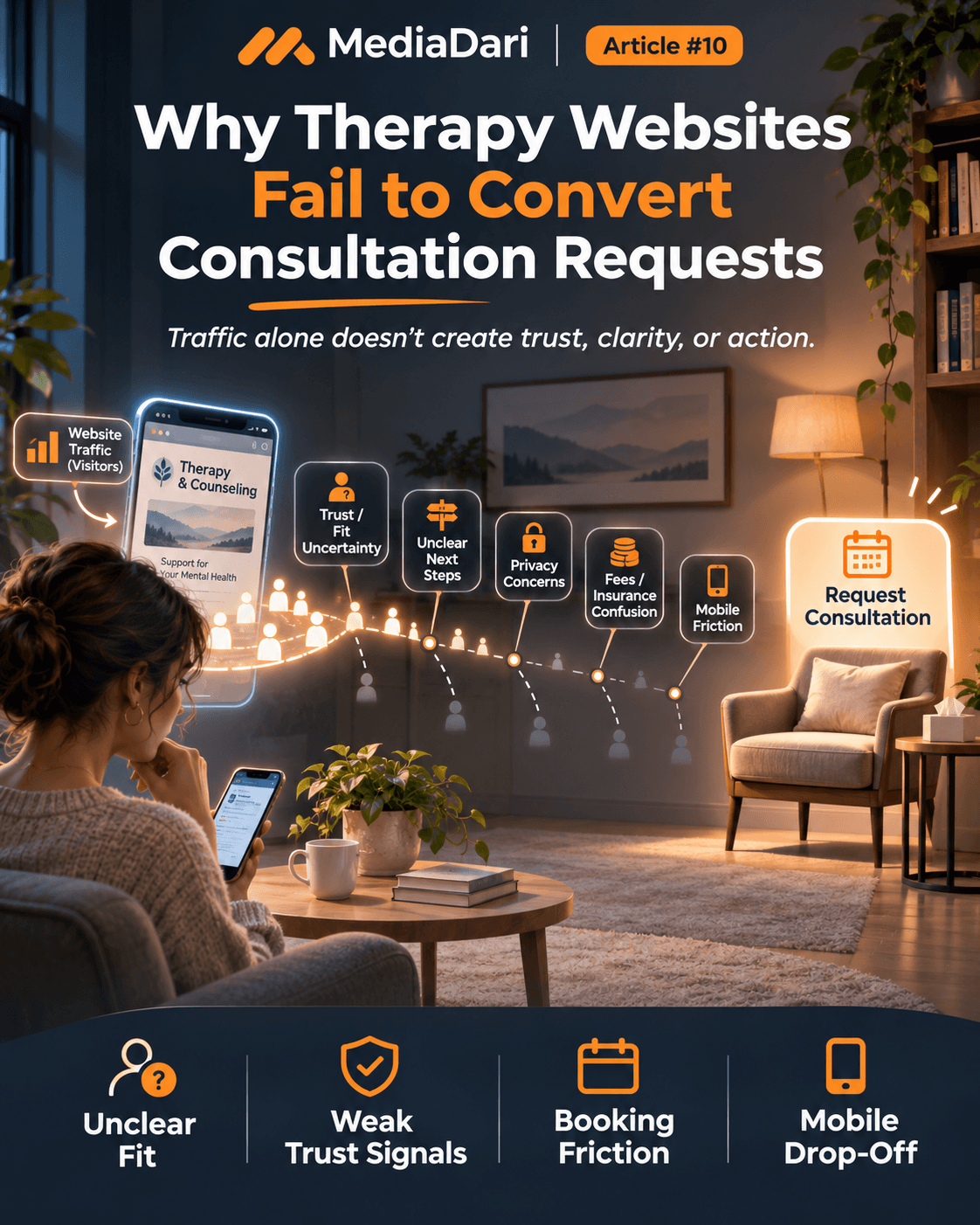
For a therapist in private practice, a website may receive steady traffic without producing many consultation requests. Visitors might read your biography, explore your specialties, and then disappear.
That doesn't necessarily mean your marketing has failed. It may mean the website isn't helping potential clients decide whether you're a good fit.
Key Takeaways
- Therapy visitors often need confidence in fit, privacy, fees, and appointment options.
- A welcoming profile is more useful than a long résumé without practical details.
- Better conversion means a clearer, safer consultation process—not more pressure.
Start with what a visitor needs to know
Therapy is personal. People often want to understand the clinician's approach, focus areas, session format, fees, availability, and next steps before reaching out.
For website messaging and consultation pathways, see MediaDari's therapist website solutions. When choosing inquiry forms, check the HHS HIPAA Privacy Rule overview and your practice's applicable privacy requirements.
If those details are scattered across multiple pages, a prospective client may leave without getting enough clarity. Consider a simple first-screen message identifying who you work with and the types of support you provide.
Avoid making promises that therapy will produce a particular outcome.
A good bio is not a résumé dump
Credentials and licensing matter, but a long chronology may not answer the visitor's main question: “Is this therapist equipped to work with someone like me?”
Use a welcoming introduction, accurate qualifications, and plain-language descriptions of your approach. Explain what a first consultation is intended to accomplish and whether it is free or paid, where applicable.
Reduce uncertainty around the inquiry
Consider these practical questions: Is the practice accepting new clients? Are sessions virtual or in person? What age groups are served? Does the practice accept insurance or offer private pay? How will someone hear back after making contact?
A clear Request a Consultation button can work well when it leads to a straightforward, appropriate contact process.
Protect privacy and set boundaries
A marketing contact form should not encourage visitors to submit detailed trauma histories or other sensitive information. Use appropriate clinical intake systems for personal health information, and make emergency limitations clear.
Test the inquiry experience on mobile, including keyboard behavior, field validation, and confirmation messages.
Diagnose the actual bottleneck
If your services pages are barely seen, visibility may be the issue. If pages receive visitors but few inquiry completions, prioritize clarity and usability. If inquiries arrive but aren't scheduled, review follow-up and availability.
Track outcomes at an appropriate aggregate level rather than building invasive behavioral profiles about sensitive visits.
Let your site reflect your care and professionalism
Thoughtful design doesn't need to be flashy. It needs to be readable, reassuring, accessible, and clear about the next step.
A Therapy Inquiry Begins With A Question Of Fit
Someone looking for a therapist is often deciding whether they will feel understood, whether a service matches their concerns, and whether making contact feels manageable. A page filled with jargon and aggressive sales language may work against those needs. Clear, human writing is more useful: who the therapist works with, the approaches offered, available formats, and what a first conversation generally involves.
Avoid promising a 'perfect match' or implying therapy guarantees particular outcomes. Explain how a consultation request differs from starting treatment, whether the practice is accepting new clients, and how someone can ask about scheduling and payment. These small details can remove uncertainty without oversimplifying therapy.
Audit The Page From The Visitor's Perspective
Imagine someone arriving on a therapist's service page from a search for anxiety therapy. Can they tell whether the clinician provides individual therapy, which population is served, and whether appointments are online or in person? Is there a visible button to ask about availability? Does the page describe the next step without requiring a long disclosure of personal information?
Test the experience on a phone, including form completion and confirmation messages. Check that the contact page is accessible from every service page. Make sure hours and callback expectations are accurate. These operational improvements may matter more than making the hero animation more elaborate.
Action Plan: What to Do Next
- Make specialties, populations served, and session formats explicit.
- Clarify consultation, insurance or private-pay, and availability policies.
- Test forms on mobile and avoid collecting detailed histories in marketing tools.
- Evaluate appropriate consultation requests and actual follow-through.
Make Payment Questions Easy To Navigate
Insurance acceptance, private-pay rates, superbills, sliding-scale policies, and cancellation terms are common decision factors, but each practice's policies differ. Explain the actual options clearly and avoid blanket promises about reimbursement. If fees change, assign someone to update the website. If patients must verify insurance benefits, say so.
The goal is to prevent a promising inquiry from turning into frustration when the person discovers an important requirement only after submitting a form. Transparent information supports trust, even when it means a visitor concludes the practice is not the right fit.
Measure Quality Rather Than Pressuring People
A marketing report can review search visibility, relevant service-page visits, consultation requests, and whether the requests match services offered. Do not treat sensitive client disclosures as advertising data. Respect privacy requirements and avoid remarketing approaches that expose or infer a visitor's mental health concerns.
For therapists, better conversions should mean fewer confusing steps and more appropriate introductions—not sales pressure. MediaDari's role can be to keep the website, content, scheduling links, and educational marketing aligned while therapists focus on care.
Therapy Website Conversion Questions
-
Should a therapist offer a free consultation? That is a business and clinical policy decision, not a universal marketing rule. If consultations are offered, clarify what the interaction covers and whether it is a request rather than a confirmed appointment.
-
Why do visitors leave after reading a therapist bio? They may not see the services they need, understand availability, or find a comfortable next step. Improve clarity before assuming the problem is the design's visual appeal.
-
Is private-pay information worth publishing? Where appropriate, yes. Transparent fee and reimbursement explanations can help people assess fit. Keep them current and avoid promising insurance reimbursement that is not guaranteed.
Explore MediaDari's marketing and website solutions for therapists, built around stronger presentation and more effective consultation pathways.
Ready to strengthen your online presence?
MediaDari helps businesses with web design, development, digital marketing, branding, and AI automation.
Let's Talk