Why Your Dental Website Gets Calls but Too Few Booked Consultations
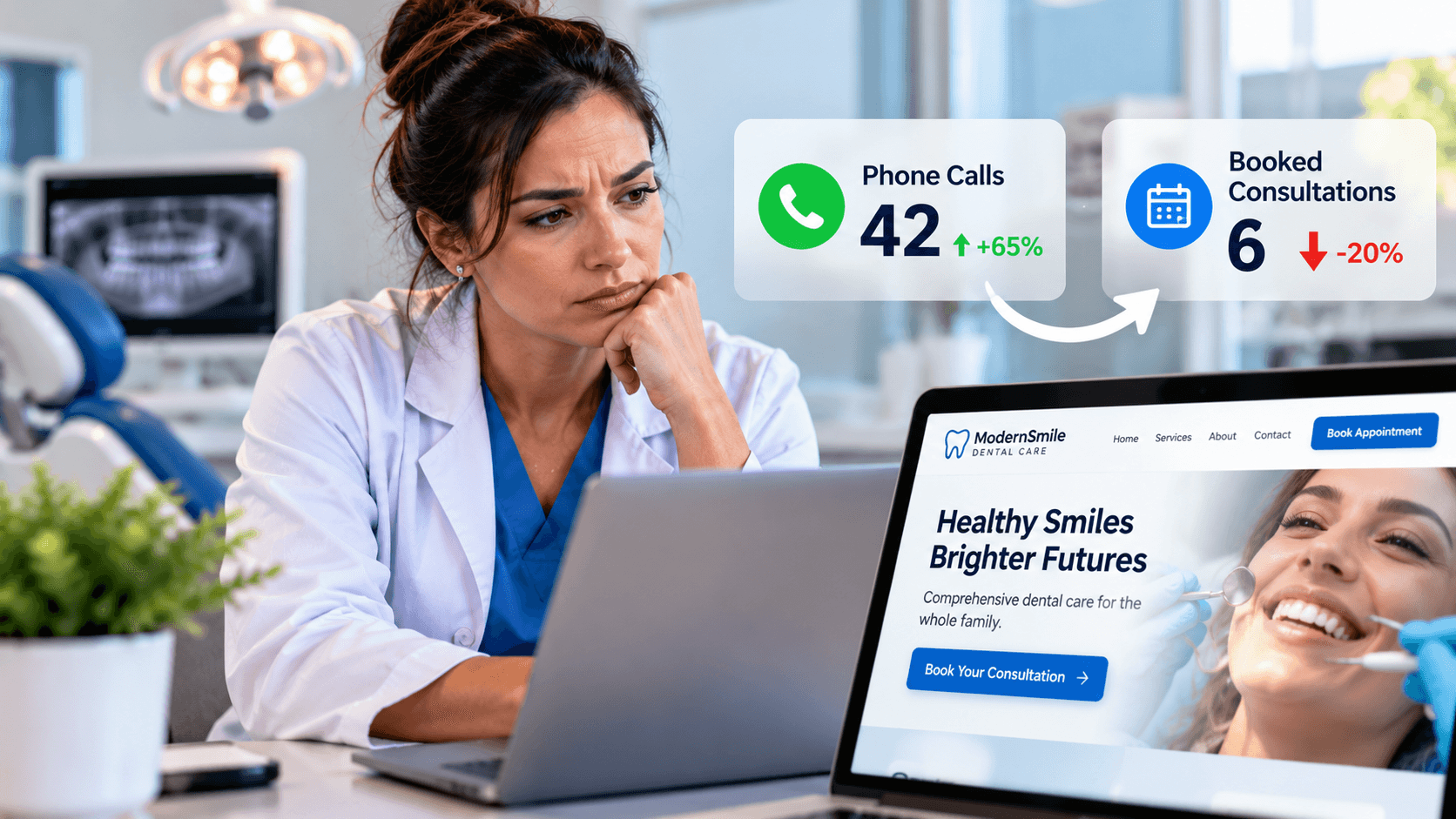
A busy phone line can feel like proof your dental marketing is working. But if most callers never schedule an examination or consultation, increased call volume may not translate into a healthier appointment book.
Dental practices need to measure completed bookings, not just calls or website visits.
Key Takeaways
- A ringing dental office phone is not the same as a booked consultation.
- Urgent, general, and cosmetic dentistry searches require different next steps.
- Front-desk follow-up and availability can be more important than getting additional clicks.
Start with the reason people call
A patient searching for emergency tooth pain has a different goal from someone researching veneers or routine cleanings. If your site sends both to the same vague “Contact Us” button, your team may spend the first minutes of every call determining what the visitor needs.
Create clear pages for the services you actually provide. Explain what happens next, relevant availability policies, and whether the visitor is requesting a consultation or an appointment.
Check what happens after the click
Review the journey from search result to call. Is your phone number tappable on mobile? Are hours easy to locate? Can visitors tell which location they are contacting? Does your booking system work outside business hours?
Then investigate the part the website can't show you: how incoming inquiries are handled. A missed call, confusing voicemail, or delayed callback can undo even a strong advertising campaign.
Make estimates and financing information understandable
Dental treatment costs can be a meaningful source of hesitation. You don't need to promise a price before an examination, but you can explain which consultations have fees, what insurance information the practice accepts, and whether payment or financing discussions are available.
Be precise. Don't publish blanket promises about coverage, eligibility, or outcomes.
Build confidence before asking for the booking
Patients often compare practices using provider biographies, location details, real photos, service explanations, and permitted patient feedback. If you publish smile galleries, obtain appropriate permissions and avoid suggesting every patient will achieve the same result.
For cosmetic services especially, trust may form over several visits to your site before someone reaches out. Give people useful explanations to revisit.
Measure the entire conversion path
Track website appointment requests, qualified calls, consultations booked, and the proportion that become completed visits. Respect applicable privacy requirements and avoid collecting patient-sensitive details through ordinary advertising tools.
If calls are rising but bookings remain flat, the highest-value improvement may be your scheduling process—not additional clicks.
A Ringing Phone Is Not The Same As A Booked Dental Visit
A dental website can generate calls while the schedule remains unchanged. Some calls may be about existing appointments, billing, office hours, or questions from people outside the practice's service area. Others may be from potential new patients who never receive the information they need to commit. Begin by distinguishing these categories rather than treating every call as a successful lead.
Ask the front desk to note, without collecting unnecessary patient details in marketing systems, why new-patient inquiries did not turn into appointments. Common operational themes include unclear insurance participation, delays returning calls, limited scheduling availability, uncertainty about consultation fees, and difficulty understanding what services the practice offers.
Create A Different Path For Each Type Of Dental Interest
Someone looking for an emergency dental appointment may care most about office hours, whether urgent concerns can be assessed, and how to contact the clinic. A prospective cosmetic dentistry patient may want to learn about the consultation process, clinician qualifications, treatment options, and financial policies. A family seeking routine care may be comparing location, office atmosphere, accepted plans, and appointment convenience.
Those needs should shape your service pages and calls to action. Avoid routing every visitor to a generic form that asks, 'How can we help?' with no guidance. A useful dental website helps a visitor identify the right next step even before the front desk answers the phone.
Check The Entire Phone-To-Appointment Process
Test the mobile click-to-call button and confirm the number rings the correct desk or service. Check what callers hear outside business hours. Is there a clear voicemail message, an alternative scheduling pathway, or information about when someone will respond? If the practice uses a call-answering service, verify that staff have correct office hours and service information.
You can also evaluate response consistency with a short operational checklist: Is the caller's requested service identified? Are scheduling options explained? Are financing or insurance questions routed appropriately? Does the practice provide a clear next step? The objective is to improve the experience, not to pressure someone into treatment.
Measure The Next Step, Not The Noise
A useful dashboard may include calls from website pages, new-patient inquiries, appointment requests, completed bookings, and reasons for non-booking. Call recordings, transcripts, and marketing pixels may introduce privacy concerns in healthcare settings; choose tracking systems carefully and obtain appropriate advice before using them.
For a dental practice, an effective marketing partner should care about the path from search result to service page to contact to booked appointment. More traffic is only valuable when it helps appropriate patients find an accessible, trustworthy practice.
Action Plan: What to Do Next
- Separate new-patient calls from administrative and existing-patient calls.
- Test click-to-call links and after-hours information on mobile.
- Clarify what each dental service offers and how consultations are requested.
- Review why otherwise suitable inquiries fail to become scheduled visits.
Dental Conversion Questions
-
Why do phone calls fail to turn into consultations? Some callers need information, some are not new patients, and some cannot find an appointment that works. Start with call routing, responsiveness, service clarity, and accurate payment information rather than concluding that traffic quality is always the problem.
-
Should an emergency dentistry page promise same-day appointments? Only if the practice can reliably substantiate that availability. State actual hours and the appropriate contact method. Avoid implying clinical suitability before a professional assessment.
-
Will a redesigned website automatically increase dental revenue? No. Design can make it easier for visitors to understand services and contact the clinic. Scheduling capacity, office processes, patient needs, and pricing all influence the outcome after the inquiry.
Learn about MediaDari's dental marketing and website conversion services. We help dental practices build a clearer path from online discovery to appointment inquiry.
Ready to strengthen your online presence?
MediaDari helps businesses with web design, development, digital marketing, branding, and AI automation.
Let's Talk